





Types of EHR Integrations Explained: What Healthcare Practices Need to Know Before Implementing AI
Explore the differences between the three types of EHR integrations, and find out how each impacts AI agents in...

Incremental implementations of voice AI take a step-by step approach that gives your business time to adjust to working with voice AI while delivering the benefits of automation to your customers for key transactions. Getting started can seem daunting but it doesn’t have to be.
When you are starting out with implementing voice assistants at your contact center, one of the initial questions you should ask is “Which processes do we want to automate first?” We advocate an incremental implementation of voice AI where more tasks and processes are added to voice assistant duties over time.
Start by automating one or two of your call center processes with voice AI. Good candidates for early process automation are:
Some examples of processes that Talkie.ai clients choose to start with automating include:
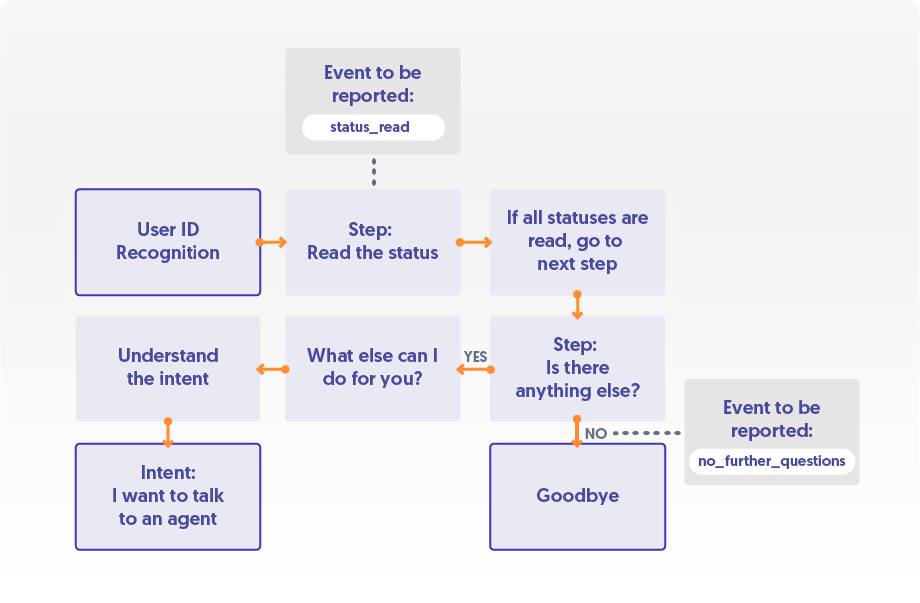
Our consultants will work with you to help determine which of your business processes are suitable for first time automation. They will also help you identify other processes that are good candidates for automation in the future for your business.

When architecting the solution, we rely heavily on the client’s input, whether it’s participation in discovery workshops or sending over call center data. Good cooperation ensures that we share a common understanding of what it means for the AI voice agent to be successful and what steps need to be taken to get there.Ada Andruszkiewicz Head of Product, Talkie.ai
Inbound calls are arguably the easiest processes to automate. Customers call with a specific need to access a service and the voice AI is able to determine whether a self-service can be offered.
Although many clients opt to start with inbound processes, it is possible to automate outbound calls. Be aware, however, that outbound calls can be subject to strict regulatory environments such as the USA federal Telephone Consumer Protection Act of 1991 (TCPA) that are in place to prevent the misuse of automation in outbound calling.
As a general rule, we advise clients to start with their inbound processes until such time as end users have become comfortable with using voice assistants for self-service and choose to opt in to receive outbound calls from the voicebot platform.
Voice assistants can, for example, proactively notify clients or customers as soon as an alarm has been triggered in their building site or when an appointment slot for a medical screening has become available. These are beneficial outbound processes that can be easily automated with voice AI.
Another process that is commonly automated with voice AI is call routing. In this scenario, the voice assistant acts as a virtual receptionist to pick up inbound calls quickly and direct the call to a relevant human consultant. By asking the caller a series of structured questions, the voice assistant will be able to redirect the caller with a high degree of accuracy to the appropriate human specialist.
With voice assistants, a caller doesn’t need to navigate complex menus. They can just state what they want, saving time for the caller and offering an improved customer experience.
Voice assistants are able to fully administer surveys. Gather net promoter scores, conduct market research and qualify leads using automated inbound or outbound calls. Design adaptive interviews that vary question patterns according to answers from respondents.
Because of its sophisticated intent detection capabilities, voice AI is also great for FAQ services. Voice assistants can be set up with essential information about your business so if you are getting after hours calls from customers, they can get that information directly from the voice assistant, rather than having to listen to a lengthy recording or being referred away from the call to a webpage. The voice assistant will be able to intelligently interpret the customers’ questions and serve up relevant information.
It might be, for example, that the most frequent customer calls your business receives are regarding your shipping policy. A voice assistant can provide a personalized greeting and answer the caller’s questions interactively. Callers can interact with the voice AI as they would with a human agent.
Voice assistants also provide effective first line support. If a customer calls with a problem, the voice assistant can automatically make a transcript of the caller’s issue, log it into the support software, arrange a time for a human consultant to be in touch and issue an appointment reminder and invitation via SMS. The human consultant can have complete access to the transcript of the first contact as well as receive the appointment details automatically in their productivity calendar.
Read more about our approach to helping our clients get started with voice AI here.

E-logistics operator, Sendit, serves B2B clients with courier ordering, parcel lockers and pickup points via their online customer store.
Sendit initially implemented Talkie voice assistants for one process that served customers who wanted to check the status of late shipments. This transaction involved a repetitive process which required accurate handling of shipment codes, a process at which the voice assistants excelled.
Following the successful implementation of the first voice assistant, Sendit added other processes for the voice assistants to handle, including late payment reminders and later outbound marketing.
Read more about the Sendit customer story here.
Another option is to use pre-trained voicebots from Talkie.ai. These pre-trained voicebots can be deployed in just one week.
Pre-trained voicebots are trained for many of the most common customer transactions. Our pre-trained voicebots for the logistics industry, for example, focus on helping callers check the delivery status of their packages and orders. These voicebots require less set up time and less initial training to start serving your customers faster.
Learn more about our pre-trained voicebots for logistics here.
An incremental approach to implementing voice AI gives your organization time to adjust and get used to working with voice AI. Your business can still benefit from the automation from the outset and gradually add more automated processes over time.
Start automating your customer service
Talkie.ai is a leading provider of advanced voice automation solutions for businesses.

Explore the differences between the three types of EHR integrations, and find out how each impacts AI agents in...
Everything you need to know about AI front desk agents for healthcare practices. Learn about features, ROI, and implementation...