







Talkie.ai Completes SOC 2 Type II Audit, Proving Compliance with Strict Security Standards
We are proud to share that Talkie.ai has successfully completed the SOC 2 Type II audit. Learn more about this world-class standard of security and...
When people hear the words “AI” and “healthcare” in the same sentence, they often assume they will have to deal with cold, robotic interactions, impersonal automation, and a system that prioritizes efficiency over human connection. But what if AI could actually bring more empathy into patient communication?
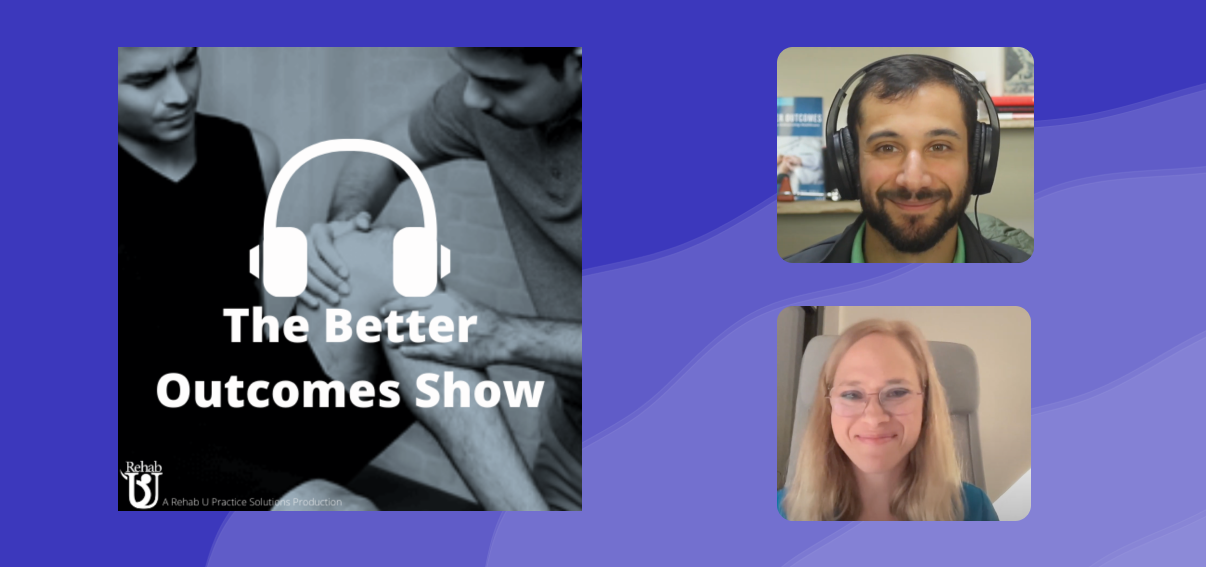
This idea was at the heart of a conversation between Rafael Salazar, host of the Better Outcomes Show, and Ada Andruszkiewicz, our co-founder and COO.
During the podcast, Ada explained how instead of replacing human interactions, our AI-driven phone bots are designed to eliminate frustrating barriers—long hold times, endless phone trees, and overwhelmed front-desk staff—so that patients can get the help they need, faster and with less friction.
This article explores how AI is transforming patient communication for the better, addressing common concerns about automation, and proving that technology—when implemented thoughtfully—can actually make healthcare more human, not less.
Despite the rise of patient portals, online scheduling tools, and chat-based communication, the majority of patients still prefer picking up the phone when they need to reach their doctor’s office. In fact, about 70% of interactions between patients and healthcare providers still happen over the phone.
Why? Convenience and familiarity.
Patients want a fast, straightforward way to deal with the matter they wish to solve. The problem is, calling a medical practice is rarely a seamless experience. For most patients, calling a doctor’s office means facing some common issues like:
As Rafael put it:
Wouldn’t it be great if there was a way to call a clinician’s office and get an immediate response […] without having to go through the dreaded phone tree?

AI-powered voice bots eliminate frustration and delays by instantly triaging calls, handling routine requests, and transferring patients to the right person when needed.
If the request can be handled automatically—like checking appointment times, rescheduling, or processing a prescription refill—the bot takes care of it.
If the patient does need to speak to a human, the system routes them to the right person faster—no endless transfers, explaining their issue multiple times, or hearing “your call is very important to us, please continue to hold” for half an hour.
When Talkie picks up the phone, there’s no limit. You never wait.

By making phone communication faster and friction-free, AI isn’t removing the human element from healthcare—it’s making it easier for patients to get the care they need.
Medical front-desk teams are the first point of contact for patients, yet they’re constantly stretched thin. A typical practice misses 30-50% of incoming calls simply because staff can’t answer fast enough. The issue isn’t just staffing shortages—it’s the extreme peaks and valleys in call volume that make it difficult to manage.
[Medical front desk teams] juggle three conversations at the same time. How do you not make mistakes and how do you not go mad? I don’t know.
Subscribe to our newsletter and get access to the Talkie Educational Vault!
AI-powered voice bots take over routine calls, freeing up front-desk staff for more complex tasks. Instead of answering the same repetitive questions all day, teams can focus on patients who actually need their attention.
Here’s what Ashley Glisson, Senior Administrator at MHP Radiation Oncology—one of Talkie.ai’s clients—had to say about that issue:
By handling the high-volume, repetitive calls, AI doesn’t replace human staff—it removes the bottlenecks that prevent them from doing their jobs effectively.
When people think about introducing automation in healthcare, many assume it will reduce the patient experience to pushing people through a system like a checklist. But the truth is, healthcare phone interactions are often already dehumanized, even without AI.
Patients experience dehumanization when they:
There are multiple practices, or multiple different settings, where you can already say the process is dehumanized, even though they’re not using any technology. What does it mean that something is dehumanized? Usually it means that you are treated with no empathy. You are treated with no respect for your sense of urgency or your time. All these things that make a service or product dehumanized, I don’t think they’re really connected to using or not using technology inherently, but with the way the service is provided.
Rather than replacing human connection, AI frees up staff to actually engage with patients when it matters most. By handling repetitive, transactional tasks (like scheduling, appointment confirmations, or prescription refills), AI allows human staff to focus on patients who need real attention and care.
Doctors also benefit from this shift. With AI capturing and entering complete, structured information into the EHR, clinicians receive full, accurate details instead of incomplete notes or rushed messages. This means they spend less time chasing missing information and more time providing quality care.
And for patients? The experience is often less frustrating, not more. Instead of waiting on hold or navigating a confusing phone tree, they can get the help they need immediately.
One common fear regarding AI voice agents is that patients will be tricked into thinking they’re speaking with a real person. But deception erodes trust. Talkie.ai doesn’t pretend to be human—it provides a smooth, natural interaction while making it clear that it’s an AI voice assistant.
You have to sound natural, but you cannot deceive people. People hate that, and then you lose trust.
AI also improves accessibility by allowing multilingual support on demand. Instead of relying on whether a Spanish-speaking receptionist is available, a patient can simply say “Español,” and the bot will switch languages seamlessly—ensuring they get the right information, in the right way, at the right time.
The goal isn’t to replace human interactions—it’s to eliminate the frustrating barriers that prevent them. When staff aren’t overwhelmed, they have the time and energy to be more present, attentive, and empathetic with the patients who need them most.
Far from making healthcare colder—when used correctly, AI is making it more human.
1. |
Fewer missed calls and faster responses |
Instead of leaving 30-50% of calls going unanswered, AI voice agents pick up every call, triage patient needs, and either resolve requests instantly or transfer them seamlessly. |
2. |
No more phone tag—complete information from the start |
AI eliminates the endless back-and-forth by collecting complete patient details upfront, ensuring doctors receive clear, structured information without follow-ups or guesswork. |
3. |
Better patient experience, without changing their habits |
AI-powered phone automation fits seamlessly into patients’ existing habits—no apps, accounts, or passwords needed, just a simple phone call. |
4. |
More inclusive, multilingual support |
AI voice agents remove language barriers by instantly switching languages, ensuring clear, accessible communication without relying on limited bilingual staff. |
5. |
Less stress, less burnout, happier teams |
AI eases front-desk stress by handling routine calls, allowing staff to focus on high-value tasks, assist in-person patients, and reduce burnout. |
When AI steps in, patients get faster responses, staff feel less overwhelmed, and doctors receive better information. Instead of replacing human interactions, AI removes the obstacles that make healthcare communication frustrating for everyone.
It’s not about automating care—it’s about making access easier, clearer, and more efficient.
The fear that AI will strip away the human touch in healthcare is understandable—but it’s also misplaced. AI isn’t here to replace human interaction; it’s here to help the humans in healthcare achieve their goals. It ensures that patients are heard, doctors receive complete and accurate information, and front-desk teams can work without constant stress.
The best healthcare automation is invisible—patients don’t think about the AI behind the scenes, they just experience smoother, faster, and less frustrating interactions.
Dive deeper by listening to the full episode of the Better Outcomes Show, where Rafael Salazar and Ada Andruszkiewicz discuss:
🎧 Listen here: AI Healthcare Phone Service to Improve Patient Access.
See Talkie.ai in action
Get a demo and find out how it could support your practice

We are proud to share that Talkie.ai has successfully completed the SOC 2 Type II audit. Learn more about this world-class standard of security and...

In this article, we explain how you can optimize the operations at the medical front desk, the nerve center of any medical facility....