


What We’ve Learned at athenahealth Thrive Summit 2025
Talkie.ai shares key insights from the athenahealth Thrive Summit 2025—covering themes of connection, AI in healthcare, and...
 Appointment Scheduling
 Waitlist Management
 Confirmations & Reminders
 Patient Recall & Outreach
 Front Desk 24/7
 New Patient Intake
 Prescription Refills
 After Hours Support
 Messages in Your EHR
 FAQ Automation
 Phone: Inbound & Outbound
 Text: SMS & Forms
 Website Chat
 Voicemail Replacement
 Spanish & Multilingual
We heard that question more than once at our booth at athenahealth Thrive 2026 in Nashville. It’s a fair one. The exhibit floor was full of AI front-desk vendors, and many of them are new to this market.
For anyone who hasn’t been: Thrive is athenahealth’s annual user conference. athenahealth’s cloud-based athenaOne serves a network of 170,000+ clinicians, and it has won Best in KLAS for Overall Independent Physician Practice Suite three years in a row. It also built the first Marketplace among EHRs, and 74% of its providers use at least one Marketplace solution. So when athenaOne practices gather in one place, every partner in that ecosystem wants to be there.
So, how long have we been around? Long enough to have seen the athenaOne AI space change significantly over the years.
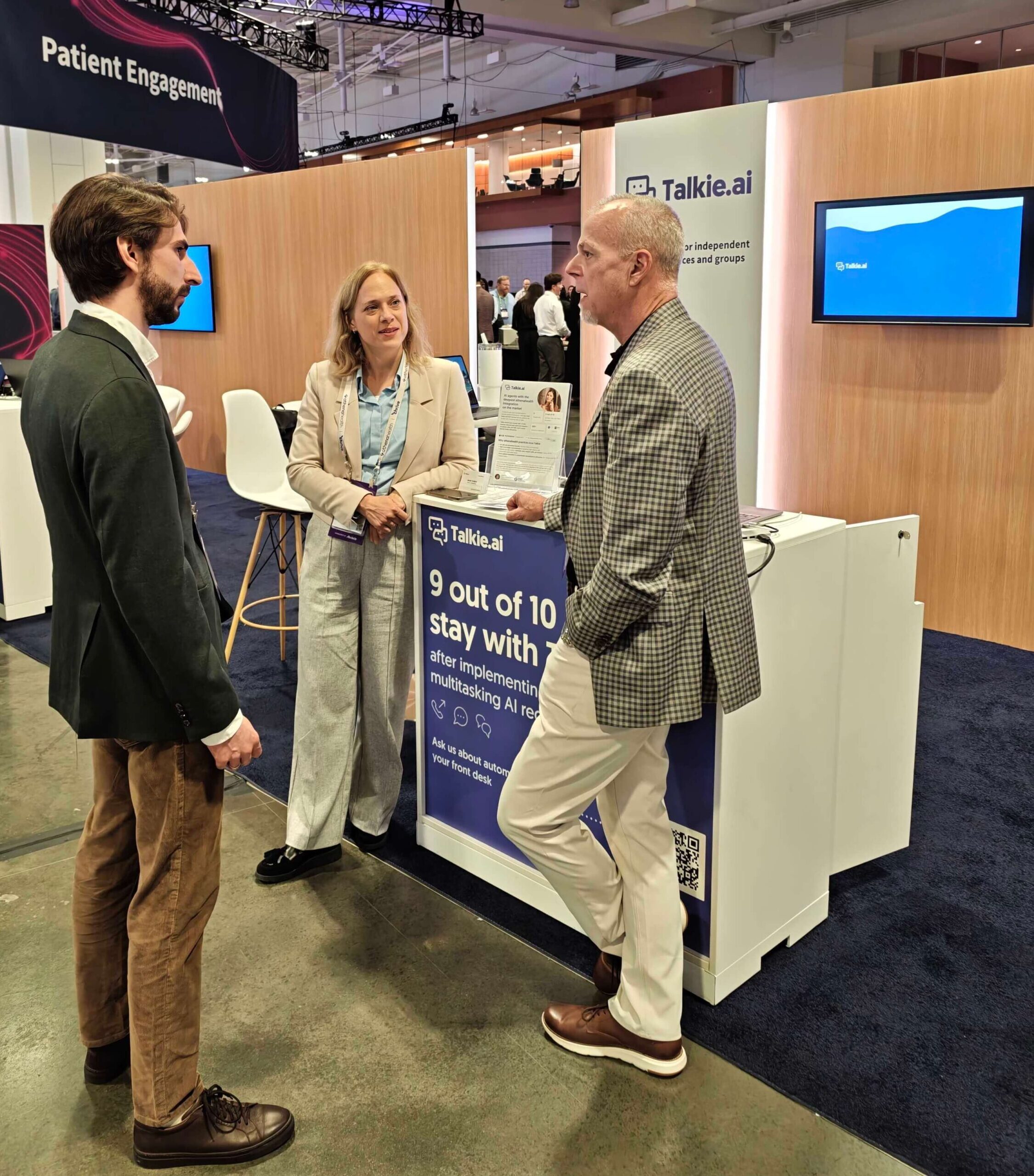
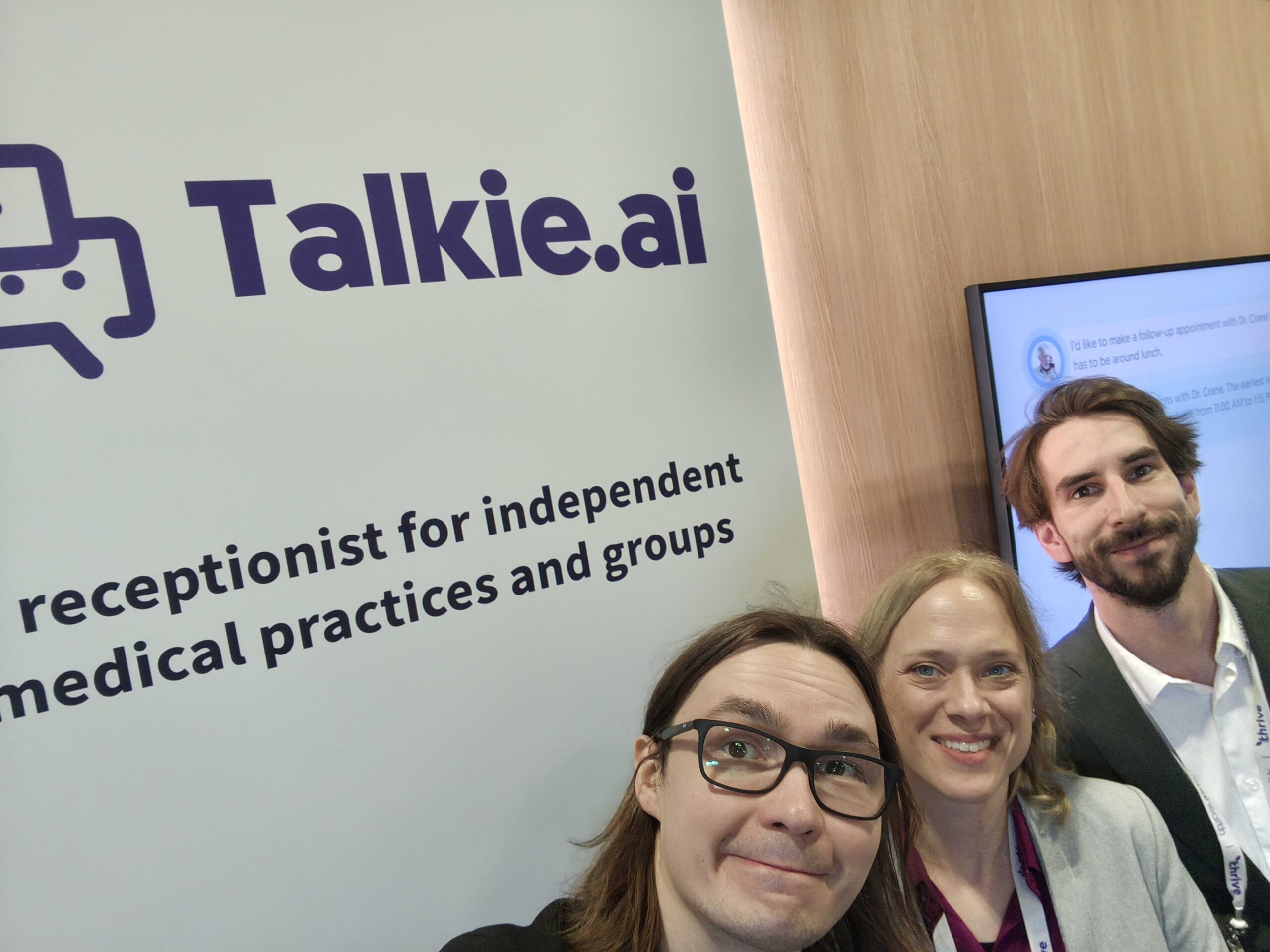
Thrive 2026 was our third Thrive in a row, after Austin in 2024 and Nashville in 2025, and this year Ada, Jan, and I were at the booth. We’ve been building healthcare automations since before ChatGPT launched, and athenaOne practices have been our home ground for years. Today 300+ practices use Talkie, and we’re an approved vendor for Privia Health, a physician enablement company whose network spans 5,600+ providers in 25 states and DC.
Three Thrives in, the conversations at our booth sound very different, and the change is encouraging. Practices have moved from doubting AI to choosing it. Here’s how that happened.
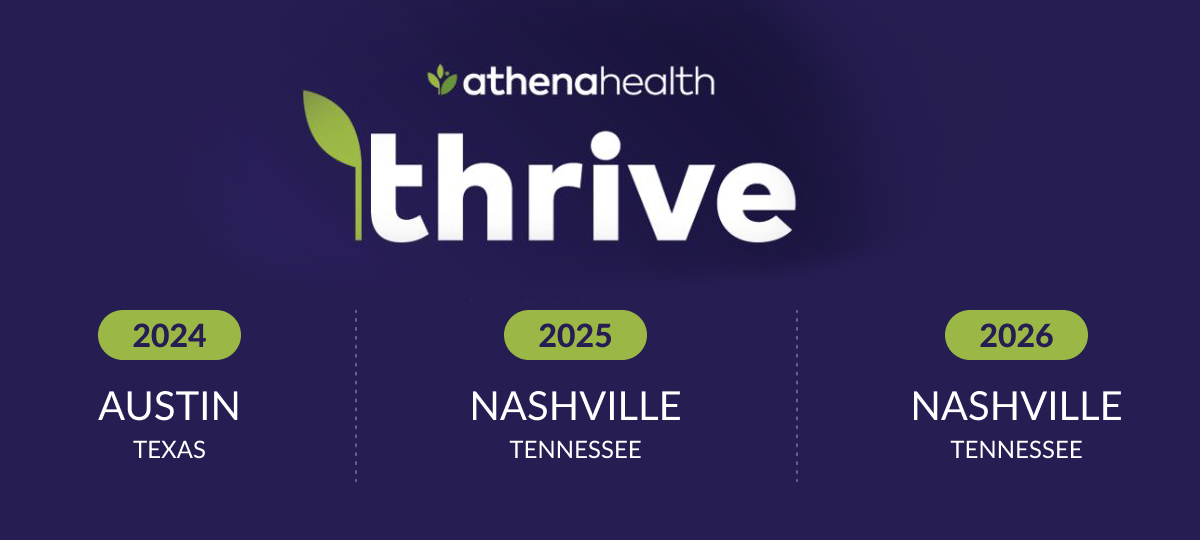
In 2024, AI at the front desk was still new territory. The research showed it: that fall, fewer than half of medical groups (43%) said they had added or expanded any AI tools that year, according to an MGMA Stat poll.
And we saw it in person at our booth in Austin, where the questions matched:
Reasonable questions about a new technology, and a useful baseline for how far things have come since.
A year later, AI was everywhere in medical groups. By fall 2025, 68% had added or expanded AI tools, mostly for clinical documentation.
The front desk was catching up: in April 2025, only about one in five practices used a chatbot or virtual assistant to talk with patients.
On the Thrive floor, you could see the category picking up steam and maturing: our team counted around 10 AI agent vendors, up from a handful in 2024. Practices were walking the aisles comparing them side by side.
The question was no longer whether AI could do the job, but which vendor does it best.
By 2026, practice leaders were aiming their AI investment squarely at the front desk. In a February 2026 MGMA Stat poll, they ranked scheduling (31%) and phone calls (27%) as the front-office work they most want AI to take on, ahead of registration, eligibility checks, and prior authorization.
We knew the space had grown fast, and we came to Nashville expecting a busy floor. We were still surprised by how packed the AI front-desk section was. It shows both how much practices need help and how far this technology has come. Many practices told us their heads were spinning from all the options.
Another positive surprise: fear of AI had mostly faded. A couple of people told us they deliberately keep patient contact human. But far more said their teams are overwhelmed, and they came looking for the best fix.
On Monday, athenahealth invited us to its Partner Leadership Forum. The message from athena’s leadership was clear: athena competes as an ecosystem, not as a standalone EHR. As one leader put it, “athena can’t be everything to all customers, but our ecosystem can.”
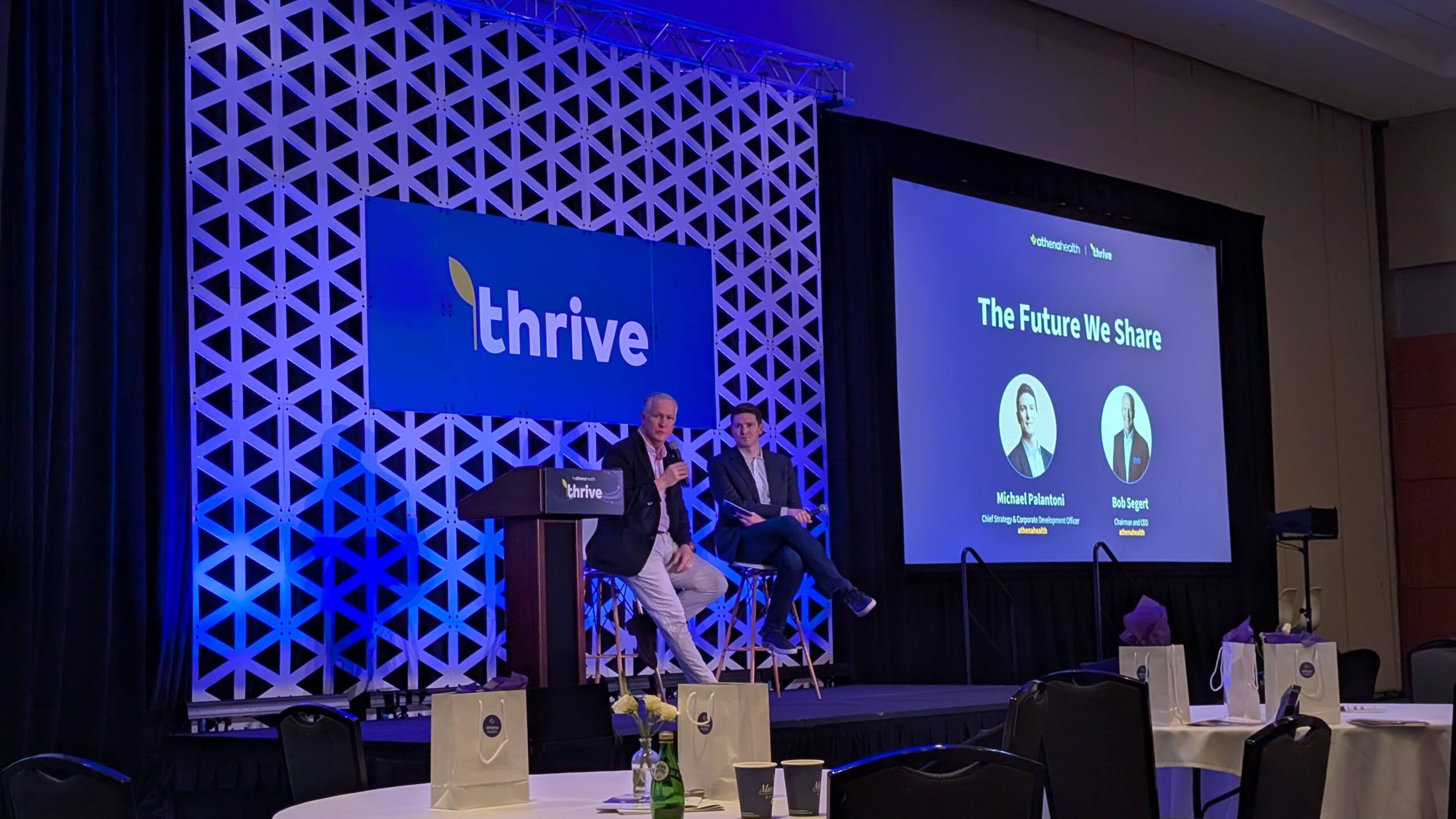
The numbers back that up. athenahealth now has 777 solution partners, up 30% from last year, and is aiming for 1,000. Connections between athenaOne practices and partners grew 30% too, to nearly 30,000. Thrive has grown with it: about 1,900 customers and 125 partner sponsors this year.
athenahealth is also investing to make those integrations deeper, so partner tools can work right inside athenaOne instead of alongside it, with more built for AI on the way.
For practices, that’s great news: more choice, and partner tools that live inside the workflow instead of in another browser tab. It also raises the bar. athenahealth told partners it will hold them to the same high standard its customers hold athenahealth to. We’re glad to hear it. Deep integration has been our focus from the start, and it’s a standard we’re proud to meet. What matters is how deep an integration goes, and whether an AI agent resolves a call inside the chart or leaves follow-up work for staff.
That’s the bar we hold Talkie to, whether the call is about scheduling, a refill request or a message for the doctor. It should end with the appointment booked, the refill request logged or the patient case created in athenaOne, not a message someone has to type into the chart by hand.
When every booth promises the same thing, practices look for signals they can trust: who has been vetted, who has been around, and whether practices like theirs already use it.
This is where Privia helped us stand out, and it came up again and again. Because we’re an approved Privia Health vendor, Privia practices know we’re already vetted, and getting started is quick and easy. One visitor spotted the Privia slide in our booth video and said: “Oh, Privia is using you? Cool!”
It was also clear that independent practices and groups have a strong interest in AI. That’s exactly our wheelhouse, so we had many productive conversations with them throughout the week.
(Be sure to check out our case studies of AI receptionist implementations with independent practices.)
One trend we love: practices give their Talkie agents names. Jessica, Luna, Sophie, Zoe. Whenever we mentioned it at the booth, people smiled.
A named agent feels like a new member of the front-desk team – leagues beyond the phone trees of the past. And like any new team member, it gets better with feedback, with our team tuning it to how the practice works.
We’re proud that Talkie was named a top 3 fastest-growing partner in the athenahealth Marketplace multiple times in 2026, and some of the practices behind that growth first met us at Thrive.
ESD Pediatric Group, a two-location pediatric practice in Cincinnati on athenaOne, evaluated three vendors and met our team in person at Thrive before choosing Talkie. Its agent “Jessica” now handles 6,000+ calls a month, 20-minute hold times are gone, and the scheduling team leaves at 5:05 instead of 6:00.
Health + Glow Primary Care and Med Spa in Tampa saw results early. Two months after going live, its agent “Sophie” was answering 1,000+ calls a month, with over a third of patient cases created after hours.
In three years, the question moved from “does AI work?” to “which AI works best?” We’re glad to have been part of every step. Thank you to the athenahealth team for hosting, and to every practice that stopped by our booth. If you’re weighing AI for your front desk, see how our athenahealth integration works and start with our 7 must-ask questions before choosing an AI agent.
We didn’t get a chance to talk in Nashville?

Talkie.ai shares key insights from the athenahealth Thrive Summit 2025—covering themes of connection, AI in healthcare, and...
Looking to add an AI assistant to your medical practice? This buyer’s guide outlines key questions to ask vendors before making a...