







AI Patient Scheduling: Best Way to Get Started (And Why You’re More Ready Than You Think)
How to get started with AI patient scheduling: a step-by-step guide for practice managers, from mapping rules to going live and measuring...
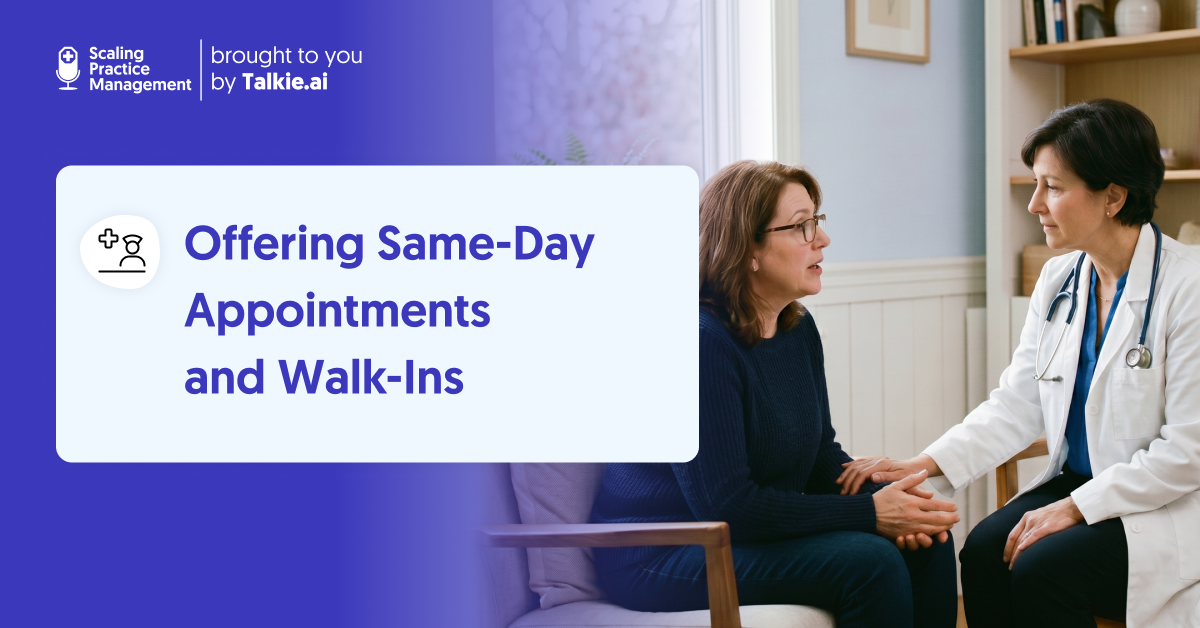
This article is based on an episode of the Scaling Practice Management podcast: “ER Doctor Turned CEO on Building a Culture That Heals,” with guest Dr. Joy Evers, MD, founder and CEO of Healthtopia Clinics. Watch the full conversation below – or click here.
It now takes an average of 31 days to land a physician appointment across the largest U.S. metros – up from 26 days in 2022 (AMN Healthcare, 2025). For family medicine specifically, the wait is around 23 days. For a patient who is worried, in pain, or new in town, that may as well be forever. Most of them won’t wait – they’ll call the next practice on the list.
So the practice that can answer “Can you be seen today?” with a yes holds a real advantage. The catch is doing it without turning the schedule into chaos.
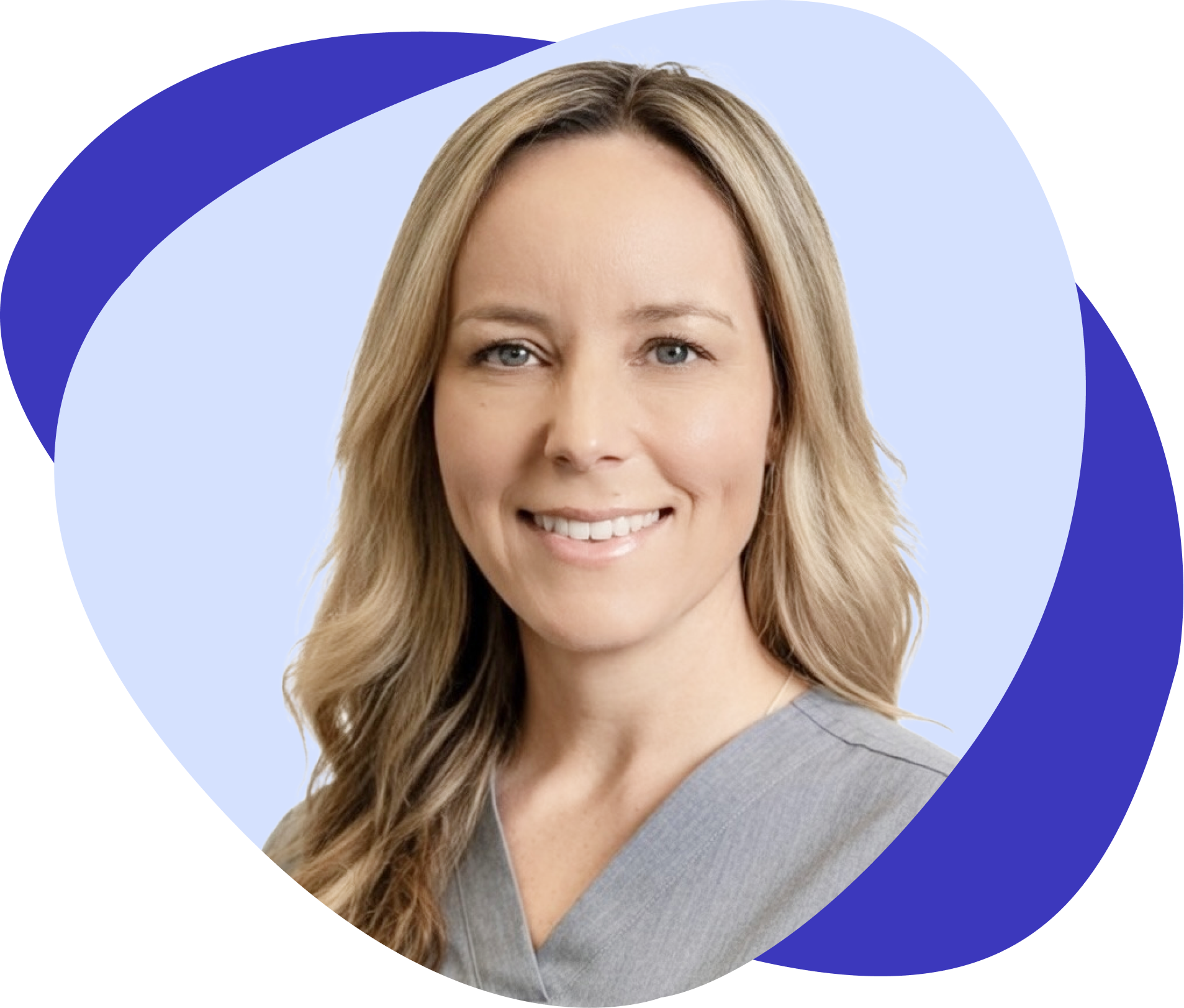
Dr. Joy Evers has cracked it. A board-certified emergency physician, she’s the founder and CEO of Healthtopia Clinics – an integrative primary care group with four locations serving about 35,000 patients across Southern California.
Her team offers same-day appointments and walk-ins on top of an already full schedule, and they pull it off by deliberately designing slack into the calendar rather than booking every slot solid. Here’s how they do it.
For Healthtopia, speed of access is a core promise, not an extra.
If you’ve experienced interacting with a larger health system, it could be six to 12 weeks to get an appointment with a primary care doctor. We can literally schedule people to establish care within 24 hours or less.
Patients hearing that it could be 12 weeks to get an appointment is exactly what turns them away. Every one who can’t get in soon is a booking that goes somewhere else. Closing that gap is crucial.
The most common objection to same-day slots is that they wreck a packed calendar. Dr. Evers flips that logic. Instead of squeezing appointments as tight as possible, she deliberately leaves room:
We schedule our appointments at either 20-minute intervals or 40-minute intervals, depending on how much time we need. Those are longer appointments than what you’d find in a normal primary care environment, where 15-minute appointments are more typical. We do that so we can spend more time with people, but it also builds in a buffer into our schedule that allows us to squeeze in walk-ins. It lets us say yes to people that have urgent needs.
This is the practical version of what the American Academy of Family Physicians calls advanced or open access scheduling – the principle of doing “today’s work today” by holding capacity open rather than booking every slot weeks out. The buffer is what makes a walk-in a “sure, come in” instead of a “sorry, we’re full.”
It sounds counterintuitive that longer appointments help you fit more patients in. But the buffer does double duty. It gives providers time to do the visit well, and it leaves slack to absorb the unplanned.
There’s a retention payoff, too. A 2025 study of a Texas health-center network found that patients who got more time with their physician were meaningfully less likely to miss their next appointment – roughly a 10% drop in the odds of a no-show for each additional standard block of time (American Journal of Managed Care, 2025). Fewer no-shows means fewer holes in tomorrow’s schedule, which makes the whole system more forgiving.
For Dr. Evers, the willingness to flex comes straight from the emergency department:
The culture of an ER doctor is you see whoever comes through the door. You just do it… not being constrained by having to stick to a schedule all the time, and having that mindset of flexibility, which is what allows us to offer walk-ins and same-day appointments layered on top of our existing schedule.
You don’t need to rebuild your calendar overnight. Start small:
One thing worth checking before any of it matters: whether the phone gets answered when a patient calls to ask for that same-day slot. Open capacity does no good if the call goes to voicemail after hours or during a lunch rush. That’s a strong case for putting an AI receptionist like Talkie.ai in place – so every request reaches a real answer and lands in an open slot, no matter who’s at the front desk.
Same-day access isn’t about running your team ragged. It’s about designing a little room to say yes – and letting that yes become the reason patients choose you over the practice down the road.
Dr. Evers covered far more than scheduling in this episode – how she built a culture that heals from the top down, how her providers run real-time curbside consults across conventional and integrative medicine, and why she chose insurance-based care over direct primary care. Watch the full episode of Scaling Practice Management here.
Is patient phone access top of mind?
See how an AI receptionist can answer, book, and triage your calls around the clock
How to get started with AI patient scheduling: a step-by-step guide for practice managers, from mapping rules to going live and measuring...
Looking to add an AI assistant to your medical practice? This buyer’s guide outlines key questions to ask vendors before making a...